When your hearing feels dampened, it can interfere with your daily routine and leave you feeling withdrawn from your surroundings. It is common to presume that muted sound indicates long-term hearing deficiency, but the issue is often just a resolvable cerumen obstruction.
Recognizing how to identify these differences guarantees you obtain the appropriate treatment, whether that is professional cerumen extraction or a clinical hearing test. There is no reason to feel stressed if auditory inputs seem muted. An exam can help you uncover the source of it, but in the meantime, here’s what you need to know about canal blockage (also referred to as cerumen impaction) vs. hearing loss.
Identifying the Symptoms of Canal Obstruction
Your ears produce wax as a natural protective process to maintain health and keep contaminants away from the eardrum. Issues arise when too much wax builds up or turns impacted.
Frequent signs of cerumen impaction consist of:
- A significant decrease in hearing volume
- The sense that there is a physical obstruction in the ear
- Ear discomfort or slight pain
- Persistent buzzing or ringing sounds
- Moments of clearer hearing after a yawn or chewing
Because obstructions are tangible, they frequently affect just one ear at a point rather than each uniformly. Fortunately, once excess wax is professionally extracted, hearing often returns to normal instantly.
Identifying the Markers of Permanent Auditory Decline
Auditory decline, particularly presbycusis or trauma-based hearing loss, has a tendency to develop gradually and doesn’t resolve when the ear is cleaned.
Markers of permanent hearing loss often feature:
- Challenges with word clarity in busy or loud locations
- Regularly requiring repetition during everyday conversation
- Adjusting electronic device volumes to a point that others find too loud
- Difficulty detecting high-pitched sounds
- Auditory ability equally reduced on both sides
Unlike cerumen impaction, auditory impairment doesn’t typically cause a feeling of blockage or fullness.
At-a-Glance: Cerumen vs. Auditory Decline
By analyzing the onset and specific markers, you can frequently determine which condition is impacting you:
- Timeline: Cerumen dampening can be quick, but lasting loss takes years
- Longevity: Cerumen issues are fixable and short-term, whereas impairment is usually chronic
- Feelings: Tactile “plugging” leads to wax, while the struggle to differentiate sounds points to loss
- Balance: Clogs are often asymmetrical, but permanent loss is frequently bilateral
Why Clinical Intervention is Crucial
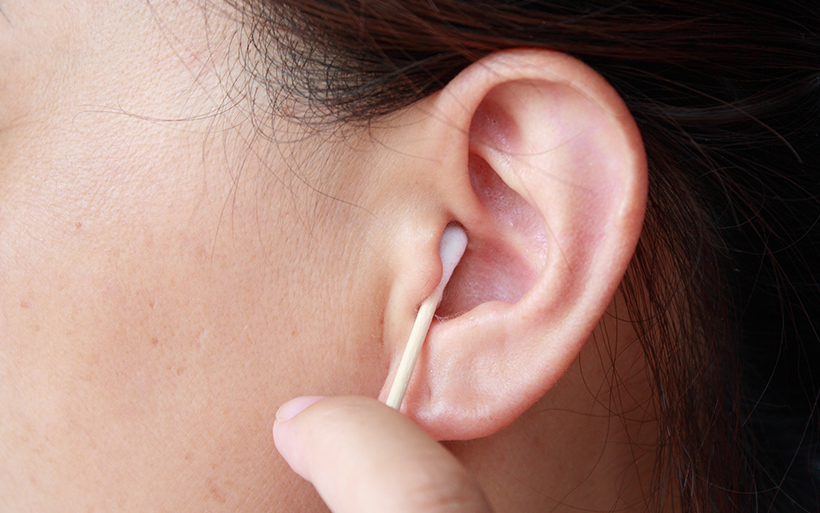
It’s tempting to assume earwax is the cause — and reach for Q-tips or store-bought treatments. Using external items commonly shoves the obstruction further into the canal, increasing the risk of trauma.
Clinical research shows that DIY removal often results in accidental injury or more difficult-to-treat impactions.
In the same way, neglecting initial hearing loss can delay treatment that assists in maintaining communication, security, and quality of life.
The Importance of a Professional Otoscopy
A specialist can use an earlight to instantly visualize if a mechanical obstruction is visible.
If wax is found, safe removal often clears signs immediately.
When the ear is unobstructed but auditory input remains muted, a diagnostic assessment is required to evaluate your hearing integrity.
The National Institute on Deafness and Other Communication Disorders (NIDCD) recommends prompt evaluation whenever shifts in auditory function conflict with your daily routine.
Choosing the Correct Solution for Better Sound Quality
Muted auditory quality is hardly a certain sign of long-term impairment.
Frequently, the issue is simply a collection of wax that can be easily resolved.
A clinical assessment will give you the clarity you require to advance without concern.
Ultimately, an expert exam is the only certain way to differentiate between a temporary obstruction and a permanent shift.
Treating the issue now halts the stress of the uncertainty and places you on the path to better hearing.
If you’ve noticed a shift in your hearing, reach out to our office for a formal evaluation immediately.
